
Kent Directory Years on Record
The strongest verified shelf list comes from the Washington State Library city directory and telephone book collection. Its Kent entries are separate from the later Seattle Suburban South volumes. The list names years, but it does not name a publisher on the summary line. A catalog record or title page must settle that point. The holdings are not a continuous run.
| Collection | Years documented | Where kept | How to use it |
|---|---|---|---|
| Kent city directories | 1968-1970, 1972-1975 | Washington State Library | Catalog first; on-site appointment access |
| Seattle Suburban South | 1976-1983, 1985, 1987, 1991 | Washington State Library | Search Kent within the regional volume |
| Kent newspaper film | Selected runs, 1893-2009 | KCLS | In-library microfilm reader |
| Kent museum collections | Dates vary by series | Greater Kent Historical Society | Staff-assisted research |
| Sanborn map of Kent | 1890 | Library of Congress | Free digital map |
| Federal census schedules | Public through 1950 | National Archives and partners | Free online search |
The missing years matter. No 1971 Kent volume appears on the verified State Library list. There are also gaps after 1983. Do not bridge them by assuming that an unlisted volume exists. Search the nearest earlier and later books, then turn to census, newspaper, deed, school, and museum records. The Kent volumes shown here establish what is documented, not every item that may survive in another repository.
The State Library holdings page itself shows the current access route. Its saved view helps confirm both the Kent run and the suburban series.
See the official State Library directory holdings.
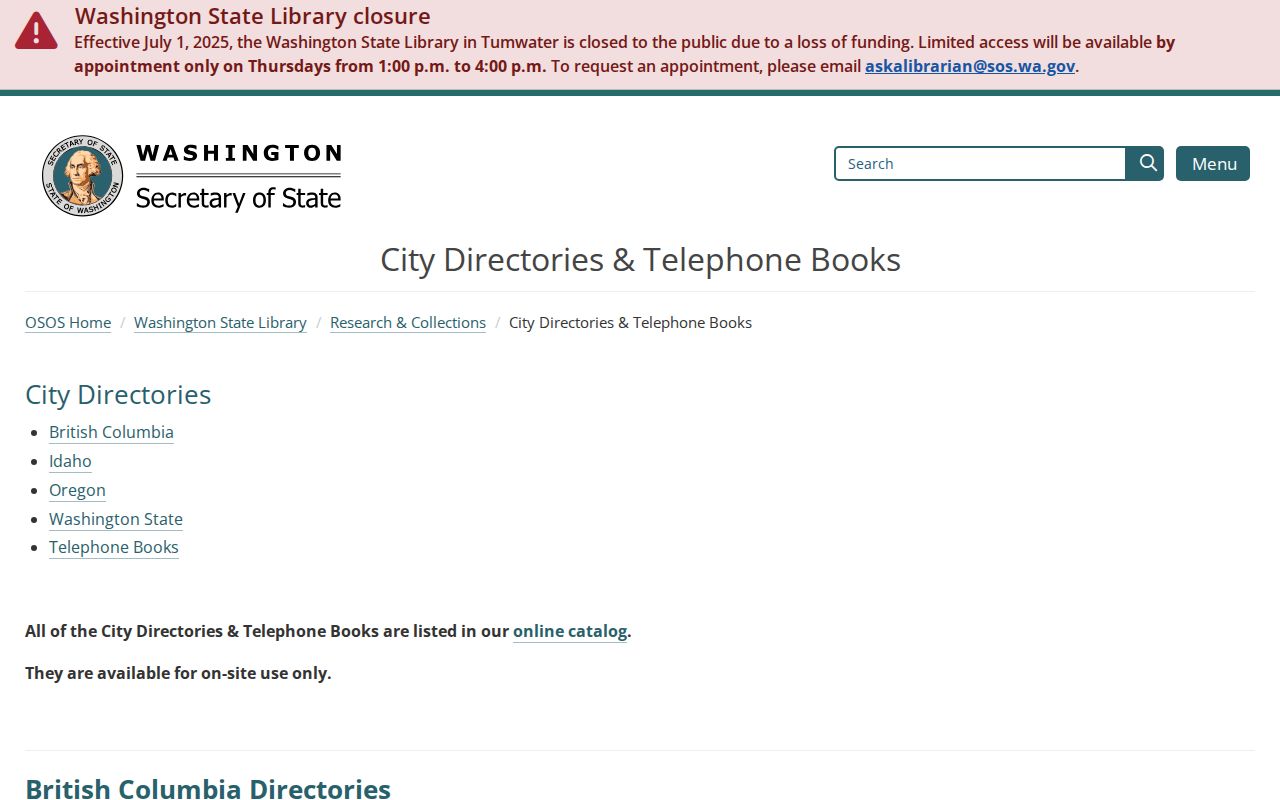
The image is a catalog guide, not a scan of a Kent entry, so the physical volume still controls spelling, symbols, and page layout.
Kent Directories Need Appointments
The Washington State Library closed to normal public access on July 1, 2025 because of funding changes. Its directory page now describes limited Thursday appointments from 1:00 to 4:00. Start with the online catalog, identify the exact title and year, and email the library for an appointment. Ask whether an interlibrary loan or reference response is possible for the item. The answer can vary because these volumes are listed for on-site use.
Bring a tight request. Give the surname, known Kent address, likely years, and any spouse or trade. Request the title page and abbreviation key along with the listing. No official scan of a sample Kent entry was found in the reviewed sources, so symbols should never be expanded from memory. A camera image of the key prevents a small mark from becoming a false fact.
Decode a Kent Directory Listing
An entry is a dated snapshot, not a full life story. Alphabetical listings may show a surname, given name or initial, spouse in parentheses, occupation, employer, street address, phone number, and an ownership or occupancy mark. A widow notation can connect two people, while a business section can tie a trade to a separate work address. Fields vary by edition, so the book's own key is the authority.
| Name | Surname and given name or initials; check spelling variants nearby |
|---|---|
| Spouse or widow note | A relationship clue that should be checked in vital, obituary, or census records |
| Work | Occupation and sometimes an employer or business address |
| Residence | Street number and street form used in that edition |
| Phone | A household link that can separate two people with the same name |
| Marks | Edition-specific signs for ownership, occupancy, boarding, or other status |
Read the lines above and below a match. Relatives can be grouped by surname, while two people with the same initials may be separated by address or trade. Copy the entry exactly before interpreting it. A later record can then confirm whether the person, spouse, and address belong to the same household.
- Criss-cross directory
- A section ordered by street and house number instead of surname. Confirm that the chosen volume actually has one.
- Householder index
- An address-led list of people identified with a home, useful when the street is known but the name is not.
- Abbreviation key
- The edition's legend for shortened words and marks. Photograph or copy it before decoding an entry.
Kent Directory Gaps in Newspapers
The KCLS microfilm list reaches far beyond the verified directory shelf. It includes the Kent Advertiser for 1893-1894, Kent Journal for 1913-1916, several 1918 title forms, Kent Advertiser-Journal for 1919-1934, Kent Valley News in 1935, and Kent News Journal from 1936 through September 1986 with stated gaps. Later film includes Valley Daily News, South County Journal, King County Journal, and Seattle newspapers for selected periods.
These papers are companion sources, not substitutes for the books. Obituaries can identify kin. Legal notices may tie a name to land or an estate. School, church, club, election, marriage, cemetery, and business items can explain why a person appears under an unfamiliar initial or leaves the directory run. Search a narrow date span around the change, then verify the result in a deed, probate file, death record, or census schedule.
The Kent Library page identifies a microfilm and microfiche reader, scanner, and historical paper holdings. That page is also the source for current branch access information.
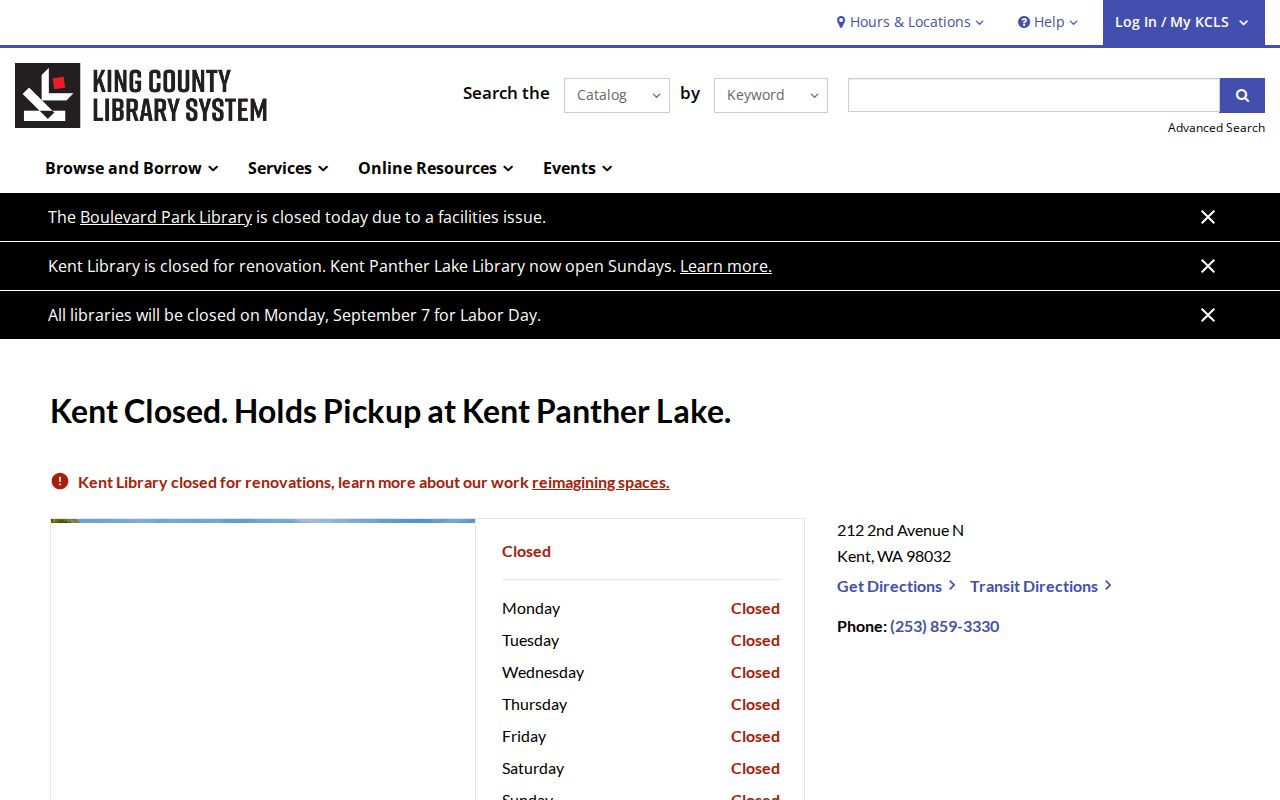
The branch listing confirms the local research tools, while the title-by-title KCLS film list supplies the years and documented gaps.
Kent Directory Clues at Museum
The Greater Kent Historical Society at the Kent Historical Museum keeps a different kind of directory. Its archive includes historic school research, oral histories, photographs, maps, public and personal papers, and Japanese heritage material. The museum occupies a furnished 1908 house at 855 E Smith St and is open Thursday through Saturday from noon to 4:00, according to the city's history material. Call 253-854-4330 before a focused visit.
Ask staff for a finding aid, annual, neighborhood file, farm-family paper, photo caption, or oral-history reference. Give name variants, a rough period, school or group, and a street or local landmark. Some donor material may not be open like a public record, and this is assisted research rather than a bulk online name search. A museum clue becomes stronger when it matches a government record or a dated newspaper item.
Trace Kent Directory Families
Use each directory year as one point in a chain. The aim is to keep identity, address, and time aligned while filling the years between federal census schedules. Under the National Archives' 72-year rule, 1950 is the latest public federal census. Census schedules may add household members, ages, birthplaces, marriage status, occupation, and street address.
- Find the surname in the earliest likely Kent volume. Copy the full entry and its key.
- Check the nearest available year, then move forward one listed volume at a time. Record address, phone, spouse, and work changes.
- Use the street-order section when present. It can confirm the address and reveal nearby households.
- Pair the directory trail with the closest public census. Search spelling, initials, married names, and old place labels.
- When a name vanishes, check newspaper notices, probate, death indexes, deeds, and museum files before deciding why.
Absence is weak evidence. A person may have moved, died, declined a listing, used a regional volume, or appeared under a different name form. For present-day address-keyed work, the Kent street directory process shifts to parcel and recorded-document sources rather than rebuilding the historical shelf.
Kent Directory Map Baseline
The Library of Congress 1890 Sanborn map of Kent supplies a rare physical view from before the verified directory run. Sanborn sheets show streets, footprints, roof and construction details, businesses, and lot context. They do not name every resident. Pair the map with a deed, directory, newspaper, census entry, or legal description before assigning a person to a building.
The map can reveal an old alley, a vanished structure, a business use, or a street form that no longer matches a modern search. It is also useful when an early record says Titusville, White River, Duwamish, or a rural route instead of Kent. Modern parcel lines and the stable legal description can help connect those place terms.
Note: The manifest's Library of Congress screenshot failed, so the live map is linked without displaying an unverified image.
Kent Directories and Forced Absence
Directory gaps must be read against Kent history. The city grew from farming and rail links into an industrial and aerospace center. Japanese American farmers were a major part of the valley economy, and official Kent history reports about 200 Japanese American families by the 1940s. Wartime exclusion removed families in May 1942. Only about 30 families returned after the war.
A missing name or sudden land transfer in that period may reflect forced removal rather than a routine move. Use deeds, newspapers, school papers, museum oral histories, photographs, and Japanese heritage materials together. Do not infer a cause from a surname or a single transaction. The comparison must follow dates and named records. This local history is one reason the directory volumes work best as part of a broader evidence chain.
King County Archives Fills Context
King County Archives' genealogy resources route researchers to deeds, court indexes, census volumes, photos, and building-history sources. Its house-history guidance points to assessor cards and images at Puget Sound Regional Archives, where a parcel-number inquiry can locate a historic property card or photograph. A nominal scan fee may apply when an image is found.
The Archives is also a key offline fallback for older recorded documents. Prepare the name, approximate date, legal description, and parcel number if known. Research appointments and microfilm access are described on the official visit page.
Review the King County Archives visit and research instructions.
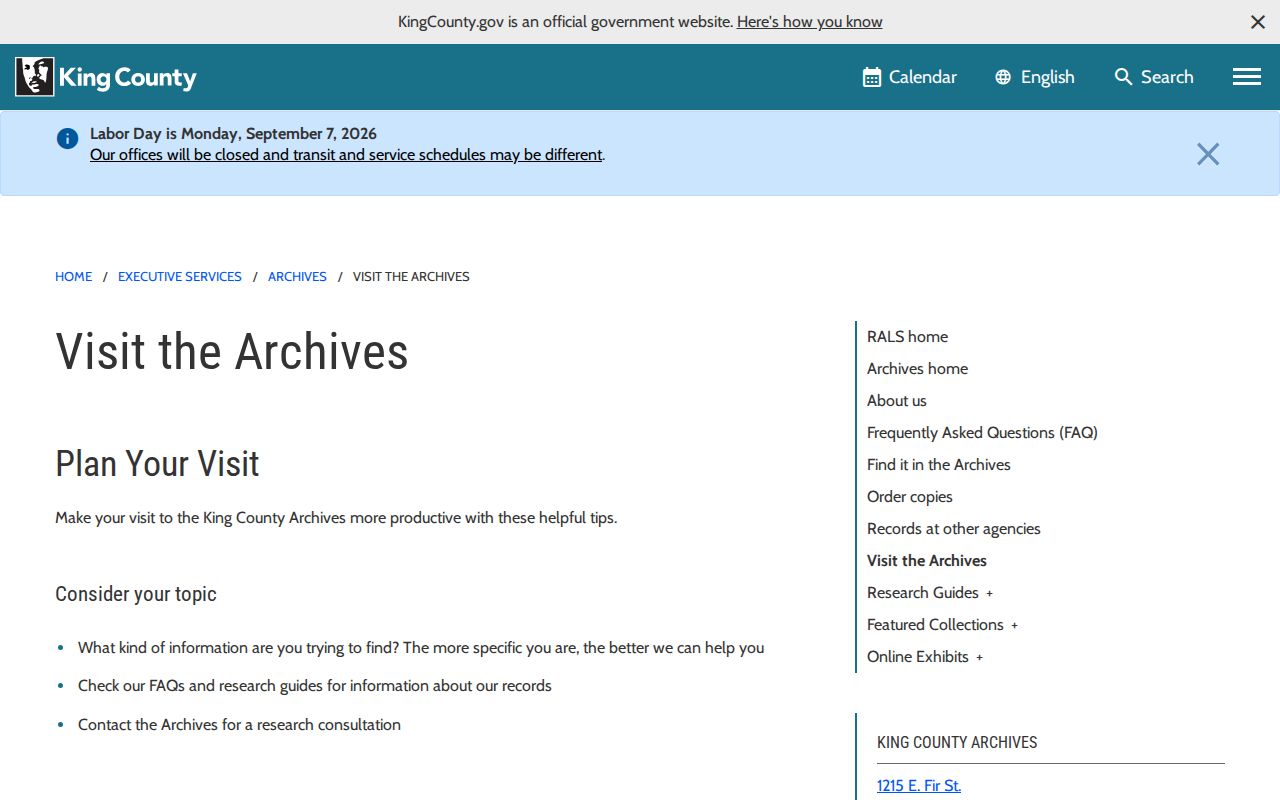
The saved view reinforces that old Kent research may require an appointment and physical media even when newer records are searchable online.